01Research Fit
Scope
Physical World Models as scalable data engines and World Action Models for embodied decision-making.
From Scalable Physical Experience to Predictive Embodied Action.
Embodied AI is entering a scaling moment, but scaling embodied systems requires more than larger policies or more robot demonstrations. It requires diverse, interaction-rich, and physically grounded experience that can be generated, structured, evaluated, and reused across tasks, embodiments, and environments. This workshop explores Physical World Models as a new scaling infrastructure for embodied AI, turning human and robot experience into scalable simulation, synthetic data, predictive rollouts, and action-relevant representations.
We organize the workshop around two tightly connected directions. Physical World Models as Data Engines asks how human videos, robot demonstrations, cross-embodiment data, Real2Sim2Real pipelines, 3D/4D world generation, visuo-tactile sensing, and data-quality benchmarks can create reliable experience for robot learning. World Action Models for Embodied Decision-Making asks how video prediction, geometry grounding, latent dynamics, touch, long-horizon reasoning, policy evaluation, and self-improving agents can bridge predicted futures and executable actions in real-world embodied systems.
Topics include, but are not limited to:




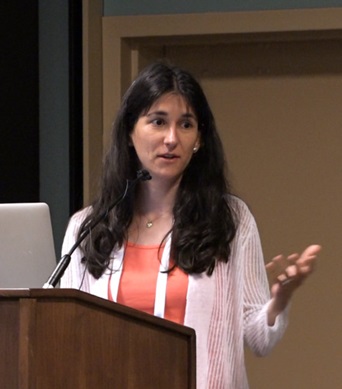
| Time | Session |
|---|---|
| 13:30 – 13:35 | Opening Remarks — Haibao Yu (CMU, USA) |
| 13:35 – 14:00 | Keynote 1 — Jiajun Wu (Stanford University, USA)Building Visual and Physical Intelligence Through Code |
| 14:00 – 14:25 | Keynote 2 — Rudra P.K. Poudel (Toshiba Europe, UK) Local World Models: Adapting Foundation Models for X |
| 14:25 – 14:40 | Keynote 3 — Lian Ruan (X Square Robot)Building Robot Foundation Models for the Physical World |
| 14:40 – 14:55 | Keynote 4 — Mingle Li (SimpleAI)From Experience to Intelligence: Closed-Loop Robot Learning for Deployable Robotics |
| 14:55 – 15:15 |
Oral Presentations I (2 × 8 min)
|
| 15:15 – 15:30 | Coffee Break and Poster Session |
| 15:30 – 15:55 | Keynote 5 — Abhinav Valada (University of Freiburg, Germany)World Models for Open-World Autonomy |
| 15:55 – 16:20 | Keynote 6 — Ding Zhao (Carnegie Mellon University, USA)Physical AI Safety: From Rare-Event Generation to Predictive Safety Evaluation |
| 16:20 – 16:45 | Keynote 7 — Katerina Fragkiadaki (Carnegie Mellon University, USA)Scaling Robot Data Human-Free using Generative Planning and Foundation Models |
| 16:45 – 17:05 |
Oral Presentations II (2 × 8 min)
|
| 17:05 – 17:20 | Challenge Session — WorldArena 2.0 Challenge track results and winning-team presentations |
| 17:20 – 17:30 | Best Paper and Best Poster Awards & Closing Remarks |
We invite original, unpublished work on Physical World Models and World Action Models for scaling Physical AI.
Accepted papers will not appear in the IROS proceedings, and submission does not preclude future publication at other venues.
Physical World Models as scalable data engines and World Action Models for embodied decision-making.
4–8 pages, excluding references, using the IROS workshop template; double-blind review.
Technical and position papers, datasets, benchmarks, challenge reports, and negative results; reproducible artifacts are encouraged.
All accepted papers must be presented as posters, with selected papers invited for oral spotlight presentations.
Presented during the Poster Session at IROS 2026.
Non-archival workshop · Papers will not appear in the IROS proceedings.
* Equal contribution.
* Equal contribution.
* Equal contribution. † Corresponding author.
Benchmarking embodied world models from perceptual quality to interactive learning and real-world manipulation. Winning teams will present their solutions during the Challenge Session.
Visual and motion quality, content consistency, physics adherence, 3D accuracy, and controllability.
Whether world models can serve as interactive environments for reinforcement learning and policy optimization.
Real-world manipulation performance in tactile WAM and vision-only WAM settings.
Awards are presented separately for each competition track.
Our team spans the USA, UK, Singapore, China, and UAE, combining expertise in vision, robotics, and safety validation.











Program Committee members





With support from our industry partners.





For submission questions, sponsorship inquiries, or program updates, contact the lead organizers directly.
David L. Lawrence Convention Center
1000 Fort Duquesne Boulevard, Pittsburgh, PA 15222, United States
Held as part of IROS 2026 (September 27 – October 1, 2026). Room assignment will be announced in the official IROS program. The workshop is an in-person event.